


To grow a fuller, longer Afro, start by reducing the damage that removes length between wash days. Clean your scalp, condition and detangle your hair gently, and choose styles that leave your edges comfortable. For anyone asking how to grow Afro hair fast, the useful first goal is to keep more of the length already emerging. Give the routine several weeks before judging it. A dramatic change in a week usually reflects stretching, styling or added hair, while genuine changes in density and retained length take longer to assess.
Your first useful question is where the apparent lack of growth is happening. Are your ends snapping? Are your coils drawing up as they dry? Has the same patch of scalp become easier to see? Those observations lead to different next steps. This guide helps you make that distinction, build a manageable routine at home and recognise when a hair and scalp assessment deserves priority.
Work Out What Is Holding Your Afro Back
Start with the difference between hair emerging from the scalp and hair remaining on your head. You can change the way you wash, handle and style existing strands immediately. Working out whether your scalp has a growth or shedding problem takes a history and, sometimes, a professional examination.
Your Hair Looks Shorter After Washing
Coils bend and contract as they dry. A freshly washed Afro can look much shorter than the same hair in a twist-out or blow-dried style. Compare like with like before changing your routine. Choose one small section, gently extend it without pulling the skin and record where its ends reach. Repeat using the same section and the same preparation.
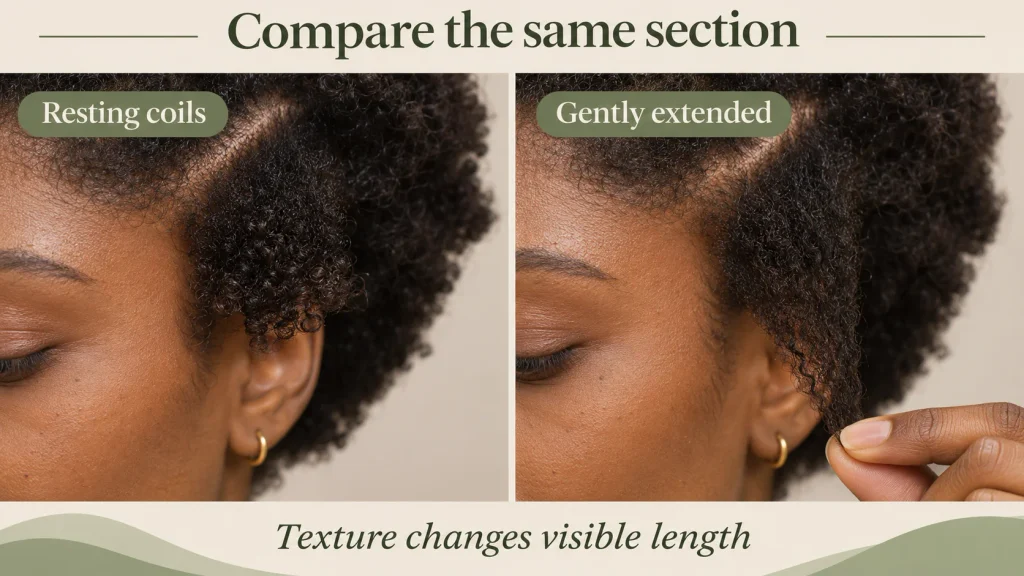
A photograph of a picked-out Afro and a photograph of wet coils answer different questions. Keep both if you enjoy documenting your styles, but label them clearly. Use a separate, consistent photograph to track length. That prevents a change in curl definition from becoming evidence that a product worked or that your hair suddenly stopped growing.
You Keep Seeing Short Broken Pieces
Look at what happens during the part of your routine where hair catches. Do the ends snag when you comb through? Do small pieces collect as you repeatedly brush the front into place? Those are useful observations to take to a stylist. The location and handling pattern can help you choose the first thing to change.
Loose hair in a brush does not provide a complete diagnosis. Long strands, short fragments and shed hairs can appear together, especially after a style has stayed in for a while. Avoid spending wash day inspecting every strand. Record the overall pattern and whether your hair is easier to handle after a change in technique.
Your Part Or Crown Is Becoming More Visible
A widening part, a receding edge or an expanding thin patch needs a separate assessment from rough ends. You may have breakage and a scalp condition at the same time. Photograph the affected area in ordinary light and arrange a medical assessment when loss is spreading, patchy or accompanied by scalp symptoms.
Pain, burning and persistent tenderness deserve attention even when the rest of the hair looks healthy. Crown-centred scarring hair loss can initially affect a relatively small area. Early dermatology assessment can help protect the follicles around it. American Academy of Dermatology guidance on central centrifugal cicatricial alopecia
Put The Three Explanations Side By Side
Use the following checks to decide what deserves your attention first. They describe observations you can bring to a professional and practical changes you can try with comfortable, intact skin.
| What you notice | A useful check at home | Your next move |
|---|---|---|
| The Afro looks much shorter after washing | Compare the same section resting and gently extended | Track length with the same preparation each time |
| The ends keep catching and short pieces appear during handling | Watch the point where your tool stops | Reduce section size, restore conditioner slip and release the ends first |
| The hairline looks thinner where a style pulls | Check the band, clips and smallest anchor sections | Loosen or remove the source of tension and seek assessment if thinning persists |
| The crown patch is getting larger or feels sore | Photograph the same parting without pulling it open | Arrange medical assessment promptly |
| More loose hairs appear after a longer gap between washes | Record the number of days since the last wash or takedown | Compare similar intervals and discuss continuing shedding with a clinician |
The practical distinction is where you intervene. A styling change can make shrinkage easier to interpret. A handling change can address repeated snapping. Progressive loss of density calls for investigation even when the ends are smooth. More than one row may describe your hair.
Give A One-Week Goal And A Three-Month Goal Different Jobs
During the first week, choose an outcome you can observe directly. You might finish detangling with less pulling, stop wearing a painful band or learn where your shortest section begins. These changes make the routine easier to control immediately. They also establish a fair starting point for the photographs you will take later.
At three months, ask whether your reference sections have retained length and whether the routine is sustainable. A single strand is a poor summary of your entire Afro. Compare the front, sides and back separately. The shorter side may still need a different fastening method even when the back is growing into the shape you want.
Set Up A Length Check You Can Actually Repeat
A simple record is more useful than a collection of daily photographs taken in different lighting. Choose a method you can repeat on an ordinary wash day without heat styling just for the measurement. The purpose is to see a direction of change while keeping the hair comfortable.
Choose Your Reference Sections
Select an accessible section at the front, one at the side and one towards the back. Make a small sketch or take a photograph of the partings so you can find the same places again. If one area is much shorter, record it separately. Averaging everything into a single length can hide the section that keeps breaking.
Measure after the same preparation each time. For example, use clean, conditioned hair that has dried in loose twists, then gently extend the reference sections. Position the tape alongside the hair and use the same starting point. Release it as soon as the photograph is taken. A tight pull can change the reading and make the scalp uncomfortable.
Read The Numbers With The Photos
Suppose a reference section measures 9 centimetres at the first check and 10 centimetres at a later check. That is an observed change in that section under your measuring method. It cannot tell you precisely how fast each follicle worked, how many strands broke or whether another section changed by the same amount.
Add trims, takedowns, straightening sessions and major style changes beside your measurements. If a trim removes damaged ends, a smaller number can still accompany an easier routine. Review whether the hair catches less, whether the ends look more even and whether your preferred style lasts without repeated brushing.
A Practical Check
Use your first record as a baseline. Compare again after several weeks, then at about three months. Leave enough time between checks to reduce the temptation to interpret tiny differences in hand position as growth.
Build A Wash Day Around Less Friction
The most useful routine is one you can complete carefully. A long list of products can become expensive and tiring without fixing the point where your hair repeatedly snags. Plan the wash around scalp cleansing, conditioning, gentle detangling and a finish that will be easy to maintain.
Prepare Before You Wet Your Hair
Lay out your cleanser, conditioner, sectioning clips and a suitable comb before starting. Check the tools for rough seams, broken teeth and damaged edges. A tool that catches on a small section should be replaced or set aside. You should be able to move through the hair without forcing it past a sharp or rough point.
Section longer hair so you can reach the scalp without moving the entire Afro at once. For a short crop, fewer sections may be enough. Remove obvious trapped accessories and carefully release knots around bands. When taking down braids, keep the takedown and wash in the same plan so you have time to work through the loosened sections.
Clean The Scalp Without Tangling The Lengths
Apply cleanser where oil, sweat and product collect, following the product directions. Use the pads of your fingers to work around the scalp rather than scratching with your nails. Let rinsing carry the cleanser through the lengths. If the hair tangles when piled on top of your head, keep the sections hanging in their usual direction.
Set the wash interval around your scalp, activity and hairstyle. Someone training several times a week may need a different washing schedule from someone whose scalp stays comfortable with less frequent washing. Heavy buildup, itch or persistent scaling is a reason to review the routine. Morningside Trichology also describes wash frequency as a decision shaped by the hair, scalp and lifestyle in its clinic hair-care FAQ. Leaving the scalp uncomfortable for the sake of a fixed growth schedule rarely helps you stick with it.
Condition The Parts That Catch
Distribute conditioner through the lengths, paying attention to the ends. Follow the label for the amount of time to leave it on. Add a little water if appropriate for the formula and work it through with your fingers. The practical aim is a section that separates with less resistance.
More product is not always easier to rinse. Start with an amount you can distribute, then add where the section still drags. Compare how the hair handles after rinsing and drying. A rich formula that leaves the hair sticky may make your next styling session harder, even if it feels slippery during application.
Detangle From The Ends Upwards
Support the section above the area you are working on. Begin at the ends and move higher only once that part is free. When a knot stops the tool, stop your hand too. Separate the strands gently with your fingers and restore slip before trying again. Reducing the section size can make the task more manageable.
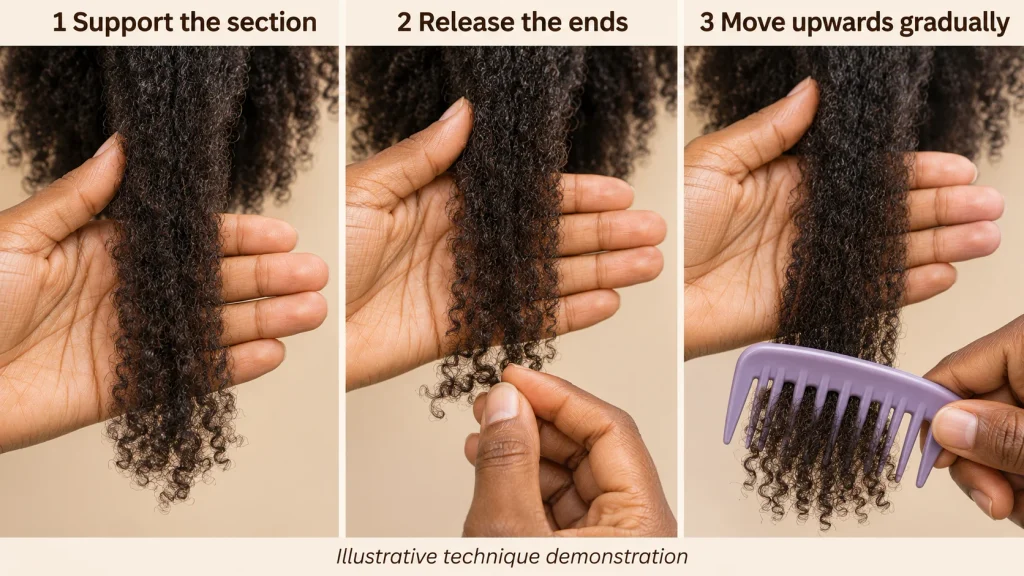
Finish when the section separates comfortably enough for the next step. Repeatedly combing an already detangled section adds handling without improving the wash. If your arms are tired and you are beginning to rush, take a break. Plan fewer styling steps afterwards rather than trying to compensate for time spent detangling.
Troubleshoot The Knot That Keeps Coming Back
A repeating knot needs a closer look at its location. When the same ends catch immediately after you free them, use a smaller section and inspect whether damaged tips are tangling together. Discuss a targeted trim with a stylist if the problem persists. Ask them to show the area before cutting so you can agree on the amount.
When the knot sits where a band or braid was secured, reconsider the fastening and takedown. Release the section completely before trying to comb it through. A conditioner cannot untie a band that remains hidden in the hair. Work in good light and remove trapped accessories first.
For dense matting that will not release comfortably, stop and seek help from a stylist experienced with textured-hair detangling. Pulling harder makes it difficult to preserve the strands you are trying to keep. Explain how the mat formed and what products are already in the hair before the appointment.
Plan Heat Styling As A Separate Choice
A stretched finish can make an Afro easier to shape, but repeated heat passes create another source of damage to manage. Review how often you straighten the same front section and whether the style requires touching it up every morning. A leave-out that needs daily correction can become the weakest part of an otherwise gentle routine.
Use tools according to their instructions and reduce the frequency of heat styling where you can. Ask your stylist for an alternative finish if the section repeatedly feels rough or snaps. Keep the length photographs separate from the styling appointment so the record does not depend on another heat session. AAD advice on styling and fragile hair
Dry And Set With Tomorrow In Mind
Blot excess water gently and arrange the hair in a style that will be comfortable while drying. Avoid securing a wet section so tightly that it pulls as you move. Make sure the scalp and hair can dry before adding layers that keep moisture trapped against them.
Think about the following morning. Loose twists, a comfortable Afro shape or another simple set may reduce the need to comb everything again. Choose the finish around your actual routine, including commuting, school, work and exercise. The best wash-day result is one you can maintain with gentle adjustments.
For general texture-specific care, the American Academy of Dermatology recommends conditioning Black hair and using care practices that reduce damage from styling. AAD guidance on everyday care for Black hair
Choose Products By The Job They Need To Do
You do not need a different bottle for every concern mentioned online. Look at where your current routine fails, then choose a product that addresses that job. A cleanser, a conditioner and a manageable styling product give you a starting point for comparison.
| Product role | What you want to observe | What to review if it goes wrong |
|---|---|---|
| Cleanser | A comfortable scalp after rinsing | Residue, irritation or difficulty reaching the scalp |
| Rinse-out conditioner | Sections separate more easily | Dragging ends or a coating that is difficult to remove |
| Leave-in or styling product | Hair stays manageable in your chosen style | Flaking, stickiness or repeated layering |
| Optional oil | A finish you tolerate and can wash out | Itch, heavy residue or unnecessary extra steps |
Judge each product over the task it is supposed to perform. A smoother finish can be useful even when it says nothing about growth at the follicle. Keep the distinction clear when deciding whether to repurchase. You may prefer a product because it makes detangling easier and shortens wash day.
Introduce One Change At A Time
Use up or set aside overlapping products before adding another complete range. When you change the cleanser, conditioner, oil and hairstyle together, you lose the ability to identify what made the difference. Record which product changed and what happened to combing, comfort and the finished style.
Take a photograph of the label and directions when you start. That is useful if a product irritates your scalp and you later need advice. Stop a product that causes a reaction and seek clinical help when symptoms persist. A tingling or burning sensation is not a reliable way to judge whether a growth product is working.
Give Oils A Defined Place
An oil may help you achieve a finish you like, but its feel is a different outcome from new growth. Decide where you intend to use it, how much you need and when you will cleanse again. Adding oil whenever the hair looks dull can create a routine that is difficult to understand or maintain.
If your main problem is tangled ends, compare the detangling step before buying a scalp oil. If your scalp is itchy or inflamed, get the cause assessed rather than repeatedly covering the area. Put your money towards the point where you have an observable problem and a reasonable way to evaluate the result.
Put Nutrition And Supplements In Context
Eating enough and having a varied diet matters to general health, including hair health. If your diet has become restrictive, you have lost weight unexpectedly or shedding accompanies other symptoms, tell a healthcare professional. The useful question is whether your history suggests an issue that needs assessment. A supplement label cannot answer that question.
Write down everything you take before a consultation, including products marketed for hair, skin and nails. Ask whether an ingredient is appropriate for you and what evidence supports its use in your circumstances. Paying for several overlapping supplements can make the routine expensive while leaving the underlying reason for shedding unexplained. AAD guidance on hair-loss self-care
Morningside Trichology lists nutritional guidance among its hair and scalp services. Ask what that guidance involves and whether a medical or dietetic referral is appropriate for the concern you describe. Keep advice about a diagnosed deficiency separate from a general promise of faster growth.
Keep Home Experiments Manageable
Recipes involving several kitchen ingredients can be difficult to rinse from dense coils. Before trying one, consider how you will remove it, whether it can irritate your skin and what outcome you expect. A photograph showing a glossy finish after a mask does not establish that it increased growth.
You can make a substantial change at home by simplifying handling. Compare the time spent detangling and the amount of pulling required before and after your adjustment. Those are immediate observations you can use. They also help you avoid chasing a new recipe every week without learning which part of your routine needs work.
Make Protective Styles Work For Your Hairline
A style can reduce daily handling while still putting strain on the roots. Check the installation, the weight and how you will access your scalp. A protective style earns its place in the routine when it stays comfortable and can be removed carefully.
Agree On Tension Before The Appointment
Show your stylist any area you are trying to protect before sectioning starts. Explain whether your temples become sore, whether a previous installation left small bumps or whether you have noticed a thinner edge. Ask how the proposed pattern will distribute the weight and whether a lighter or simpler version is possible.
During installation, speak up as soon as a section hurts. Ask for it to be loosened while the stylist can still change it easily. You should also be able to move your head, raise your eyebrows and lie down comfortably. Pain that needs days to settle is a reason to change the installation.
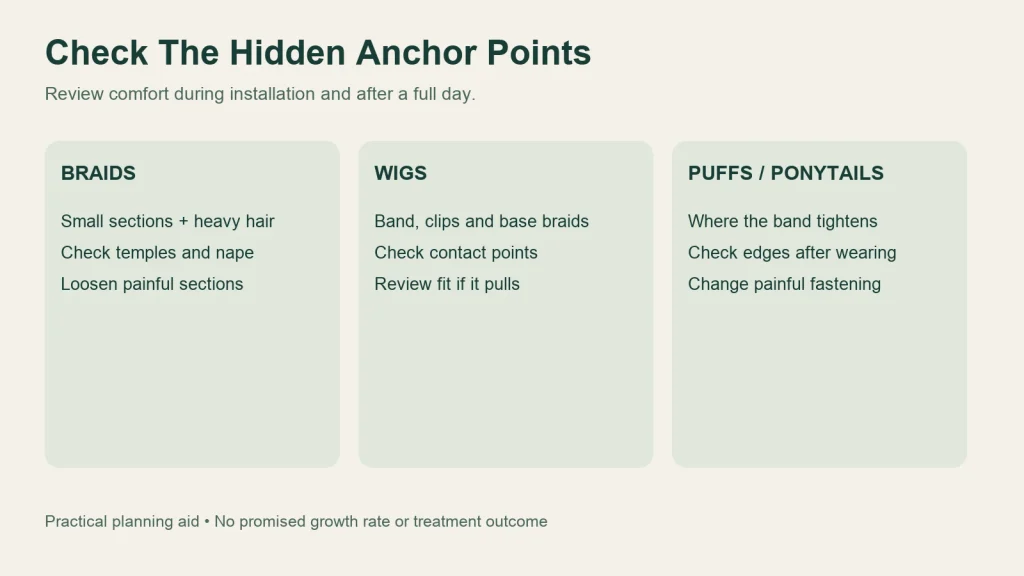
Inspect The Anchor Points
With braids, look at the smallest sections supporting the heaviest extensions. With a wig, check the band, clips and any braids underneath. With a ponytail or puff, check where the band concentrates pressure. The visible style can look loose while a hidden anchor remains tight.
Check again after exercise or a full day out. If you respond to a slipping wig by tightening the same band further each morning, review the fit. If the front of a puff becomes sore by evening, change the way it is secured. Comfort over the whole day is more informative than a quick check in the mirror.
Plan The Takedown Before You Install
Set aside enough time to remove a style without cutting or pulling through your own hair. Know where the natural hair ends before cutting extensions. Remove accessories first and work in sections that you can keep organised. A hurried takedown can undo the benefit of weeks with less daily handling.
After removal, note the areas that tangled most. Discuss those points before the next installation. Perhaps a smaller section matted near the nape, or a clip repeatedly caught the same side. Use that information to change the pattern or fastening method instead of repeating the same problem with a new style.
Repeated pulling can lead to traction alopecia, and continued tension can eventually cause permanent hair loss. Early warning signs include discomfort and broken hairs around areas under strain. AAD guidance on hairstyles that pull
Grow A Short Afro Without Restarting The Shape Every Week
Short hair has its own practical obstacles. You may trim the silhouette frequently, brush the same area into place each morning or stretch a section simply to make it fit a style it is not ready for. Choose a growth phase that your daily routine can accommodate.
Work With The Length You Have Today
Choose a shape that looks intentional with the shortest area included. If the front reaches your preferred height but the sides are much shorter, decide whether you want to keep a tapered outline while growing the top. Tell the barber or stylist which sections you want to retain before they start.
Bring a reference showing the sides and back as well as the front. A single photograph can hide how much length is needed to produce the silhouette. Agree whether the appointment is for tidying the perimeter, reshaping or removing damaged ends. These are different decisions, with different effects on the length you keep.
Adjust Picking And Brushing
Notice when you reach for the pick. Is it to lift flattened roots, separate a tangled section or chase a perfectly even outline? Use the tool for that particular task. Working through the whole Afro repeatedly because one corner looks uneven can add unnecessary handling.
A little variation in the outline is often easier to live with during a growth phase than a fresh cut every week. Decide which detail matters most for your work or personal style. You can keep a tidy perimeter while allowing other sections time to change, provided the maintenance plan is clearly agreed.
Keep The Male Routine Specific
If you are growing an Afro from a fade, record which areas are being cut at each visit. The top can gain length while the sides are repeatedly reset. That is a style choice, but it affects how quickly the entire shape appears fuller. Explain whether you want a taller top, a rounded Afro or a gradual transition from the fade.
Men with thinning temples or a changing crown should also separate the haircut decision from the hair-loss question. A different shape can change how visible an area looks. Persistent thinning deserves an assessment even if a new cut temporarily disguises it. Bring older photos that show how the area has changed.
Fit The Routine Around Work, Exercise And Your Budget
A South African shopping or salon routine should be built around what you can obtain and repeat comfortably. You can choose local services and prices without assuming that every person in the same city has the same scalp, water, schedule or budget.
Start With What You Already Own
Write down your current products and the order in which you use them. Mark the step that takes the longest or causes the most pulling. Check whether an existing conditioner works better when you use smaller sections, or whether a damaged comb is making a manageable knot harder to release.
Only then decide what is missing. A more suitable tool or enough conditioner to finish the whole head may be more useful than a third growth serum. Avoid judging value by bottle size alone. Consider the amount used each wash and whether the product allows you to complete the routine comfortably.
Compare Costs Over The Same Period
Here is an illustrative calculation using invented amounts, rather than a quoted salon price. Suppose you set aside R240 for a conditioner used over eight washes. That works out at R30 per wash. If another formula costs R180 but lasts four washes at the amount you need, the cost is R45 per wash.
Those numbers do not establish which formula is better. Add the practical outcome. Does one make detangling easier? Can you buy it again without an expensive delivery order? Do you need several additional products to get the finish you want? Compare the complete routine over the same number of washes.
Plan For A Busy Week
Choose a shorter version of your routine before you need it. Keep the steps that maintain scalp comfort and make the hair manageable. Postpone an elaborate finish if doing it carefully would mean rushing the wash or detangling. A simple style can be the more sustainable choice during a demanding week.
After exercise, check your scalp and the areas under bands or headwear. Make time to wash when needed and let the hair dry adequately. Choose a style you can clean and adjust with the time available. A routine that only works during a quiet weekend will be difficult to maintain for three months.
Use The First Three Months To Learn What Works
Three months is a useful planning period for reviewing your routine. It gives you repeated wash days and enough opportunities to observe whether handling has improved. The schedule below is a practical tracking framework, not a prediction of how much hair every person will grow.
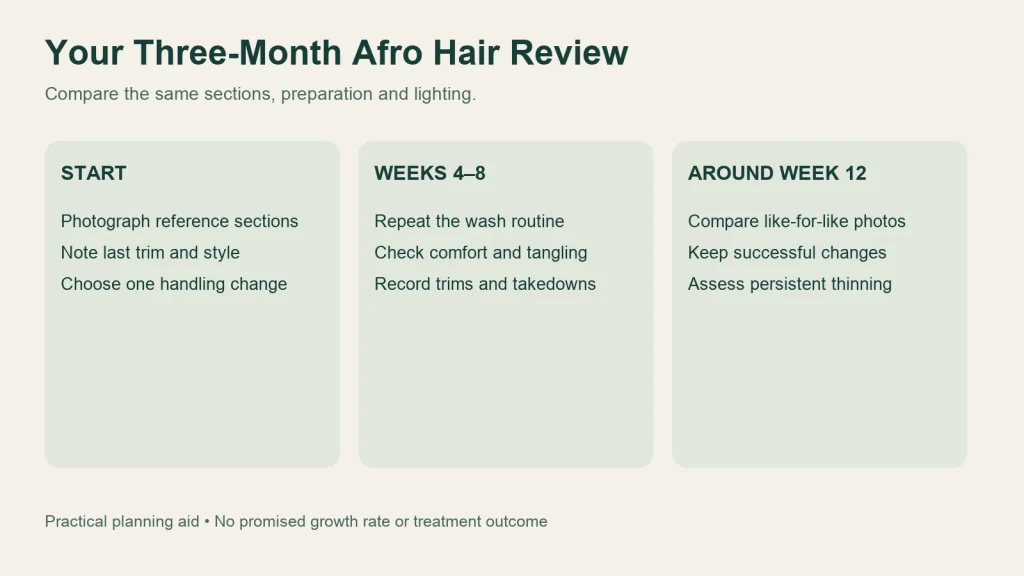
Week One — Establish The Baseline
Take your reference photos and note the current style, last trim and wash interval. Identify one priority, such as tangled ends, repeated brushing at the front or a band that pulls. Change the relevant technique first. Leave the rest of the routine familiar enough that you can notice its effect.
Set a result you can observe on the next wash day. For example, you might aim to release the nape sections with less pulling or finish detangling without repeatedly returning to the same knot. These small observations help you decide whether the new approach is practical.
Weeks Two To Four — Make The Routine Repeatable
Use the same sequence over several wash days, adjusting section size or product amount when necessary. Record the changes briefly. You do not need a diary entry about every strand. A few notes about comfort, time and where the comb caught can be enough.
At the end of this phase, decide whether to keep the change. If the routine is taking so long that you regularly rush the final sections, simplify the style or plan the wash differently. If symptoms persist or an area is visibly thinning, arrange an assessment while you continue gentle care.
Weeks Five To Eight — Check The Weak Point
Review the place where damage used to occur. Does the front still need repeated smoothing? Do the ends catch immediately after conditioning? Has a new style shifted tension towards the temples? Change the part that remains difficult rather than adding several new products to the whole head.
Take the next set of reference photos using the original method. Review the images alongside notes on trims and style changes. A longer section with an uncomfortable scalp is not a satisfactory outcome. The aim is a routine that retains length while keeping the scalp and hairline comfortable.
Weeks Nine To Twelve — Decide The Next Step
Compare the initial and current photographs at the same size. Look at the reference sections, overall shape and any area of concern separately. Write down what changed and what stayed difficult. Use that record to choose one further adjustment or to prepare for a consultation.
A useful review might read that detangling is easier and the side sections appear longer, while the crown still looks thinner. That leads to two actions. Keep the gentler handling that is working and get the crown assessed. You can preserve a successful routine while investigating a different problem.
Keep A Useful Salon Conversation Going
Before your next appointment, choose two observations from your routine to discuss. For example, you might say that your back sections stay easy to separate but your front catches every time you take down twists. Show the stylist the difference with the hair in its usual state. Ask them to watch how you release the section, because a small handling adjustment may be easier to demonstrate than describe.
Agree on a change that you can repeat at home with the tools you own. If the demonstration uses a product you do not have, ask what role it performs and whether your current conditioner can serve that role. Take a short note about the section size, starting point and amount of product. That makes the appointment easier to translate into your next wash day.
Make Night-Time Care Comfortable
Look at what happens to your hair between evening and morning. If one side tangles where it rubs, try arranging the hair so that section rests more comfortably. A smooth covering or pillow surface may suit your preferences, but check that the fastening does not press into your temples or slide into a tight band overnight.
The covering also needs a cleaning routine. Keep it free of the product residue that would make you reluctant to wear it. If the same bonnet feels uncomfortable, choose another fit instead of tightening it further. The practical test is whether your hair needs less rough handling the next morning and whether your scalp feels comfortable when you remove it.
Make Your Own Before-And-After Comparison Fair
Choose a neutral place for the photographs, away from a bright window directly behind your head. Put the camera at the same height and distance. Keep the parting visible and avoid fibres, concealers or added hair when documenting density. You can still use those styling options at other times, but the reference photograph needs to show the area clearly.
Write down whether the hair is freshly washed, stretched or carrying several days of styling product. When two photographs disagree, repeat the preparation before making a decision. A darker image or a different angle can change how much scalp is visible. Fair comparison protects you from abandoning a comfortable routine because one photograph happens to look less flattering.
Know When A Scalp Assessment Comes First
Some concerns need more than a change in conditioner. A professional can examine the scalp, ask about the timing and distribution of loss and decide whether another medical assessment or tests are appropriate. You will get more from that conversation if you arrive with a clear record.
Arrange prompt medical advice for a growing bare patch, persistent pain or burning, or a crown area that is becoming visibly thinner. Sudden patchy loss also deserves examination. If you have ongoing shedding, mention recent illness, childbirth, medicine changes, restrictive eating and other health symptoms. These details help guide the assessment. AAD guide to hair-loss diagnosis
Bring A Timeline And A Short Product List
The clinic’s first-visit guidance asks patients to bring relevant reports and details of medicines, supplements and current care. Record when you first noticed the change and whether it began before or after a new style. Include the products you currently put on the scalp, together with photographs of the labels if possible. Mention what you have already stopped using and whether that affected the symptoms.
Ask what the examination suggests, what remains uncertain and what will be checked at follow-up. If treatment is proposed, ask what it aims to change and when a meaningful review can take place. Those answers help you distinguish a plan for damaged lengths from one addressing shedding or scalp disease.
Use Local Services With Clear Expectations
Morningside Trichology lists hair and scalp analysis and hair-loss services in Morningside, Sandton. You can use its service information to prepare questions about an assessment. Confirm who will examine you, what the visit includes and how referrals are handled when medical evaluation is needed. Morningside Trichology services
When requesting an appointment, describe the main concern in one sentence. For example, say that your ends keep breaking during detangling, or that a crown patch has expanded over several months. Attach your timeline if the booking process allows it. A specific description helps the team understand what you need from the visit. Request an appointment
FAQs On How To Grow Afro Hair Fast
These questions address the decisions people often face after choosing a basic routine. Use them to refine your plan without turning every suggestion into another product purchase.
How Can I Grow Afro Hair Fast In A Week?
Use the week to establish gentle handling, remove sources of tension and take your baseline photos. You may see an immediate difference in shape or manageability after conditioning and styling. Allow more time before evaluating retained length. Keep the measurement method consistent so a stretched style does not become confused with a change in growth.
Choose a single practical goal for the week. If your ends always knot during wash day, focus on sectioning and detangling. If a band pulls at your temples, change the fastening method. These are changes you can evaluate immediately while giving the longer-term record time to develop.
How Do I Grow Natural Afro Hair At Home On A Small Budget?
Begin with a cleanser and conditioner that let you keep the scalp comfortable and separate the hair gently. Check your tools and simplify the styling steps. Spend on the gap you have identified, such as replacing a rough comb, rather than buying a complete routine because one product carries a growth claim.
Write down how many washes a product lasts at the amount you actually use. Compare the cost per wash and the effect on handling. The lowest shelf price may require more product or extra steps. A manageable routine that you can repeat is a better basis for learning what suits your hair.
Will Cutting My Hair Help It Grow Faster?
A trim changes the ends and shape. Discuss it when the ends repeatedly catch or the outline needs reshaping. Ask your stylist to show you the area they propose removing before cutting. That gives you a chance to agree how much length you want to keep.
Record the trim in your tracking notes. A shorter measurement after a planned cut does not tell you that the scalp has stopped producing hair. Review the next few wash days for easier separation and less repeated snagging. Those observations help you decide how useful the trim was for your routine.
Can Men Use The Same Afro Hair Routine?
The core tasks are similar, while the haircut and daily styling pattern can differ. A short fade may need little sectioning, but repeated brushing and frequent perimeter cuts still affect the result you see. Explain your intended shape to the barber so the maintenance work supports that goal.
If you are growing the sides out, expect the shape to change while sections catch up. Choose a manageable intermediate style and record what is being trimmed. Persistent temple or crown thinning deserves its own assessment, regardless of how short you keep the rest of the hair.
Should I Start A Hair-Growth Supplement Or Medicine?
Bring persistent shedding or thinning to a healthcare professional before choosing treatment. A history and examination can help determine what needs investigating. Tell the clinician about medicines and supplements you already use, as well as pregnancy or breastfeeding where relevant. The right discussion depends on the cause of the change.
For rough or tangled lengths, begin by reviewing handling while arranging assessment if needed. Supplements and medicines have different purposes and suitability considerations. Ask what problem a proposed option addresses and how the result will be assessed, so you can make an informed decision. AAD guidance on managing hair loss
Conclusion
Give your Afro a routine you can repeat gently. Start with a consistent length record, address the step where the hair catches or pulls, and review the result over several weeks. Choose products according to the job they do in that routine.
At about three months, compare length, manageability and scalp comfort separately. Keep the changes that are working. If a part is widening, a patch is expanding or your scalp remains sore, bring your photos and timeline to an assessment so the next step addresses the cause.